Learn how drug loading affects pharmaceutical pellet quality, coating, dosage, release, and formulation performance, and why optimal loading matters.
Written By
Aishwarya Salunkhe
Published on
17 September 2026
Tags
Drug loading is the amount of the drug substance loaded in a pellet compared to the total weight of the pellet. This is a critical formulation parameter because it determines the amount of drug substance in each pellet and, therefore, how many pellets are needed to achieve the desired dosage.
In drug-layered pellets, the active ingredient is deposited on the surface of the excipient sphere or core by employing an appropriate drug-layering technique. The quantity of active ingredient in the final pellet gradually increases as the coating develops around the core.
However, there is a lot more to the process of loading a drug than just packing as much API into the drug formulation as possible. This is because the amount of API used should consider factors such as the core material, binders, processing, pellet strength, and even the need for coating.
Thus, when developing pellets, the main aim is to achieve the right loading amount to meet dosing requirements while maintaining pellet quality.
Higher drug loading is beneficial because it allows more Active Pharmaceutical Ingredient (API) in a smaller pellet mass. It can also minimize excipients in the dosage form.
For modern and advanced encapsulation methods, achieving an adequate drug-loading level is especially crucial when creating pellets for capsules, tablets, or multiparticulates. Proper encapsulation design helps ensure uniform API distribution and preserve pellet integrity.
A higher amount of drug loading would also allow for more flexibility during the development process of controlled-release drug formulation. At the same time, increasing API loading should not reduce pellet mechanical properties, stability, dissolution, or coating performance. Here, customized microencapsulation comes into play because the method can be adjusted to the specific API properties and loading amount.
However, the goal should not be only maximum drug-loading capacity, but also an optimum loading that considers the required dosing and other conditions associated with pellet preparation, encapsulation, processing, and the final pharmaceutical formulation.
Increasing the quantity of the active pharmaceutical ingredient (API) in the pellet is advantageous; however, increasing it beyond a certain level may pose problems for encapsulation technology and pellet design. As the API quantity increases, there is less room to incorporate excipients and coatings in the pellets.
At advanced encapsulation levels, high loading may affect the ability to achieve an even, stable drug film. High loading may affect pellet size, pellet surface properties, pellet strength, flowability, and coating uniformity. These features are especially important when developing pellets via customized microencapsulation.
Higher loading also adds complexity to using controlled-release systems. A good coating must be uniformly applied to the drug-loaded pellet to achieve the desired release pattern. Alterations to either the drug or pellet surface may affect coating adhesion, homogeneity, and eventually dissolution.
This is why customized encapsulation becomes essential in highly loaded systems. Rather than focusing only on the amount of API that can be loaded, formulation designers should consider the whole picture, including API loading, encapsulation, core material, pellet, coating, and release specifications.
Thus, the objective of modern microencapsulation is to achieve an appropriate trade-off between high API loading and pellet performance. High loading may not be optimal; optimal loading is the level at which the required dose can be delivered while retaining pellet quality.
The loading process significantly affects the pellets' physicochemical properties and functionality. As API content increases, the pellet's physicochemical properties may change, requiring a balance between loading and the needs of enhanced encapsulation technologies.
The right drug loading supports homogeneous pellets with proper sphericity, mechanical strength, flow properties, and surface properties. However, high drug loading may make it difficult to maintain these properties during layering, drying, and coating.
Moreover, drug loading may have an impact on the dimensions of the pellets. As the amount of active substance deposited on the core increases, pellet dimensions also increase. Thus, controlled drug loading is necessary to keep the particle-size distribution constant, especially if pellets are meant for encapsulation or tablets.
Another important aspect is coating performance. For custom microencapsulation, ensure the drug-loaded surface is suitable for further coating with a protective or other coating agent.
This becomes increasingly important in controlled-release technology because the coating itself controls API accessibility. Uniform drug loading, coupled with uniform encapsulation, contributes to reproducible drug release.
Consequently, drug loading is not separate from the other parameters. Drug loading, along with core selection, encapsulation technology, pellet size, coating, and manufacturing parameters, determines pellet quality. Advanced encapsulation aims to ensure the required API content without affecting other pellet quality attributes.
Drug loading and pellet coating are closely interrelated processes in pharmaceutical pellet formation. After layering the API on the excipient particle, the drug-loaded pellet serves as the basis for applying a coating. Consequently, the drug layer can affect coating efficiency.
When the degree of drug loading rises, there may be changes in the size, surface structure, and physical properties of the pellet. Controlled drug loading can create favorable conditions for the creation of an evenly coated pellet, whereas excessive drug loading may make it harder to achieve even coating. This is especially critical in advanced encapsulation and custom microencapsulation processes.
On the other hand, the coating type depends on the coating material's purpose. This coating might protect against environmental or process stresses, increase stability, and control API release. The coating plays a critical role in controlled-release systems, as the coating material and thickness affect drug availability from the capsule.
This means drug loading should be considered alongside the coating, coating thickness, polymer choice, pellet size, and processing parameters. A formulation cannot focus only on drug loading and coating separately.
Custom-tailored encapsulation technology makes this possible by balancing API loading and coating needs to achieve the right drug content, pellet structure, coating consistency, stability, and release characteristics. This method ensures that high loading does not compromise final product quality.
Custom-tailored encapsulation technology makes this possible by balancing API loading and coating needs to achieve the right drug content, pellet structure, coating consistency, stability, and release characteristics. This method ensures that high loading does not compromise final-product quality.
Finding the optimal API-to-excipient ratio is essential to pharmaceutical pellet production. Although you can increase API content to deliver more per pellet volume, you must include enough excipient to ensure pellet strength and functionality.
Many factors influence the excipient-to-API balance, including API properties, dose requirements, core material, drug layering, binder system, pellet size, and coating requirements. An appropriate excipient sphere supports even API distribution, while binders help maintain drug-layer integrity.
For advanced encapsulation, the goal is to load the API efficiently without compromising pellet quality. Customized microencapsulation involves modifying the core, loading capacity, particle size, and coating based on the specific API and dosage form.
Balancing the API and excipients is another critical factor in controlled-release technology. The drug layer should work effectively with the functional coating to achieve the desired dissolution and release profiles. Therefore, an optimized formulation enables efficient drug loading and ensures pellet strength, flowability, coating uniformity, stability, and release performance.
In essence, successful custom encapsulation is not achieved by reducing excipients or increasing API independently, but by achieving the optimal formulation that meets the dosage requirement without compromising the quality, processability, and function of the encapsulated pharmaceutical pellet.
Drug loading is integral to how a pellet-based pharmaceutical formulation is incorporated into its final dosage form. The amount of active ingredient in each pellet determines how many pellets are needed to deliver the desired dose.
For capsules, an optimized drug-loading level may help achieve the desired dose within a feasible capsule-filling volume. Other factors include consistent pellet size, density, and flow properties.
For tablets and MUPS (Multiple-Unit Pellet Systems), consider drug loading along with pellet mechanical strength. Pellets should be strong enough to withstand handling and compression without compromising their physical strength or coating.
Drug loading may also affect the amount of excipients and coating used in the preparation. This is especially true when the pellet requires a functional coating for controlled release or enteric protection.
Drug loading would be optimized using more efficient encapsulation and microencapsulation techniques customized to each dosage form. Various parameters, such as pellet size, API content, excipient choice, coating needs, flowability, and dose amount, could be considered simultaneously.
Finally, the right drug loading helps balance dose delivery, pellet count, dosage-form size, manufacturing, coating properties, and final product quality. This is why drug loading needs to be determined along with other aspects of encapsulation and dosage form development.
At Umang Pharmaceuticals, the approach to drug-loaded pellet formation is more a combination of API loading, core material selection, drug layering, particle-size engineering, and coating processes than just drug loading. In this case, the aim is to produce drug-loaded pellets that maintain API loading while keeping both physical and functional attributes consistent.
This process starts with choosing the right excipient sphere or starter core based on the API characteristics and the required pharmaceutical formulation. The right core choice allows a consistent basis for drug layering to enable proper deposition of the drug.
We then optimize drug loading based on dosage requirements and pellet specifications. We consider variables such as API concentration, binder system, layering conditions, pellet size, and drug properties simultaneously. This ensures the desired drug loading without unnecessarily affecting pellet strength and flowability.
Particle size control is another critical process parameter. Umang offers tailor-made pellet sizes from below 0.2 mm to 5.0 mm based on requirements and applications. Particle size consistency ensures more even drug layering, coating, blending, and dosage form manufacturing.
After successfully loading the drug into the pellets, they can be coated as per their functional requirements. Umang provides immediate-release, sustained-release, delayed-release, and enteric-coated pellet formulations, enabling selection of the coating process based on the API and its release requirements.
The final step is to analyze the pellets for critical quality factors such as particle size distribution, drug-loading efficiency, coating efficiency, mechanical strength, and dissolution behavior. This step is especially important if the pellets are intended for use in capsules, tablets, or MUPS.
Umang's customization is reflected in its API portfolio. For example, itraconazole pellets come in different drug content levels and custom mesh sizes, while Pancreatin EC pellets come in different strengths and pellet sizes.
Ultimately, Umang Pharmaceuticals concentrates on achieving the proper balance of API loading and pellet formulation. Using drug layering, encapsulation, particle size control, customized active loading, and functional coating, Umang Pharmaceuticals produces drug-loaded pellets to meet formulation needs.
Why Optimal Loading Matters More than Maximum Loading
However, during pellet formation, it is important not only to maximize drug loading but also to produce pellets with optimal drug loading, quality, size, coating, and performance. Optimal loading depends upon the API, dosage, excipient core, process, and release requirements.
With advanced encapsulation, controlled release, and microencapsulation technology, you can tailor pharmaceutical pellets to your requirements. This includes tailoring pellet size, optimal drug loading, optimal drug layering, and a customized coating system.
At Umang Pharmaceuticals, we can formulate pellets with customized particle size and API loading to suit different APIs, strengths, and applications. Using appropriate excipients, particle sizing, API loading, and coating, Umang aims to formulate highly loaded, tailor-made pellets.
An ideal pharmaceutical pellet does not have to be highly loaded; it should be appropriately loaded, appropriately sized, and functional.

Aishwarya Salunkhe
14 July 2026
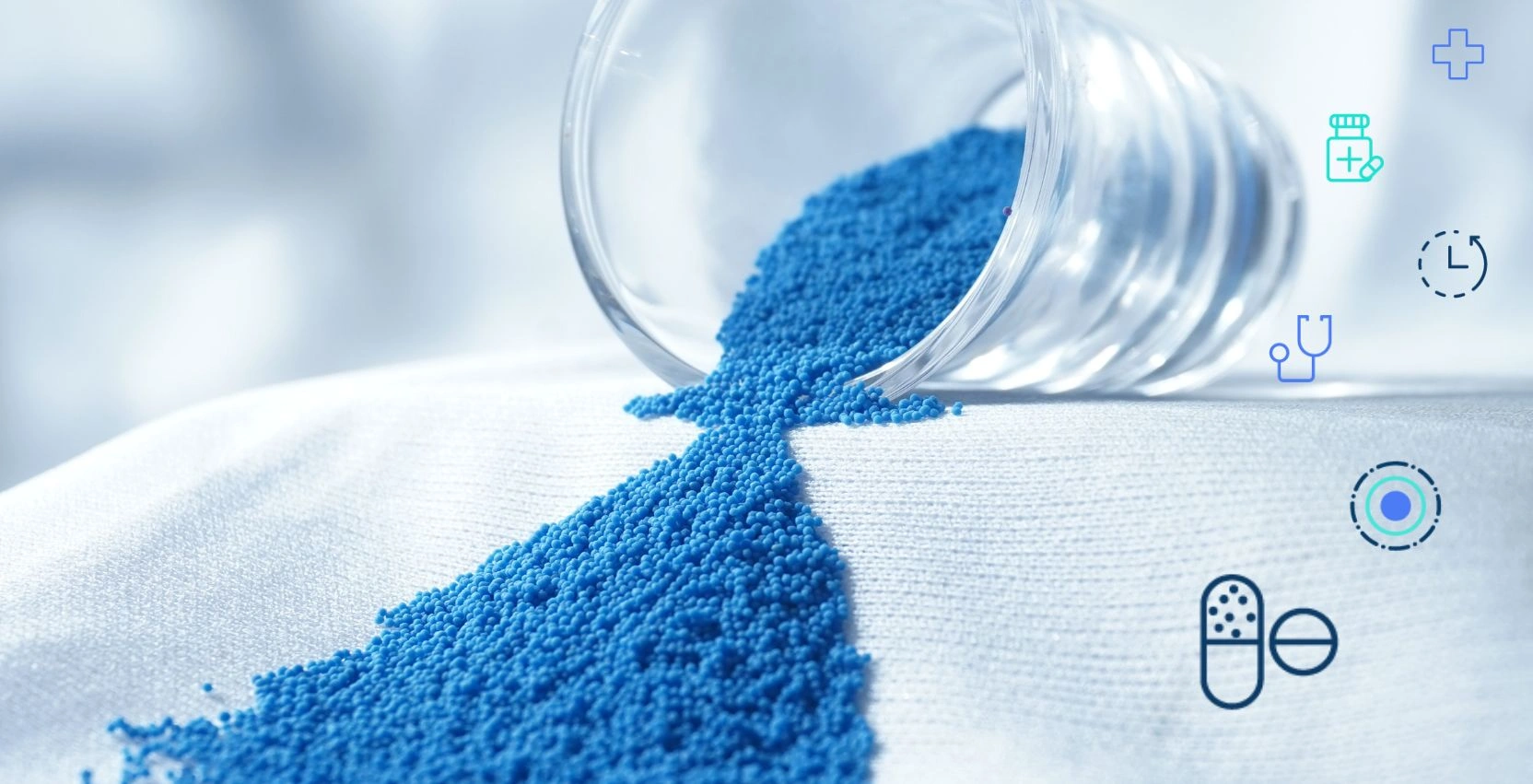
Explore five common challenges in pharmaceutical pellet manufacturing, from pellet size and drug loading to coating, API protection, and scale-up.
Read More →
Aishwarya Salunkhe
15 June 2026
Understand how multiparticulate technologies transform medication delivery by improving absorption, controlling release, and providing patient-friendly alternatives for current medicines
Read More →

Aishwarya Salunkhe
02 February 2026
Explore how enteric-coated pellets protect active ingredients from gastric acid, resulting in optimum release and bioavailability in pharmaceutical formulations
Read More →
Aishwarya Salunkhe
19 August 2026
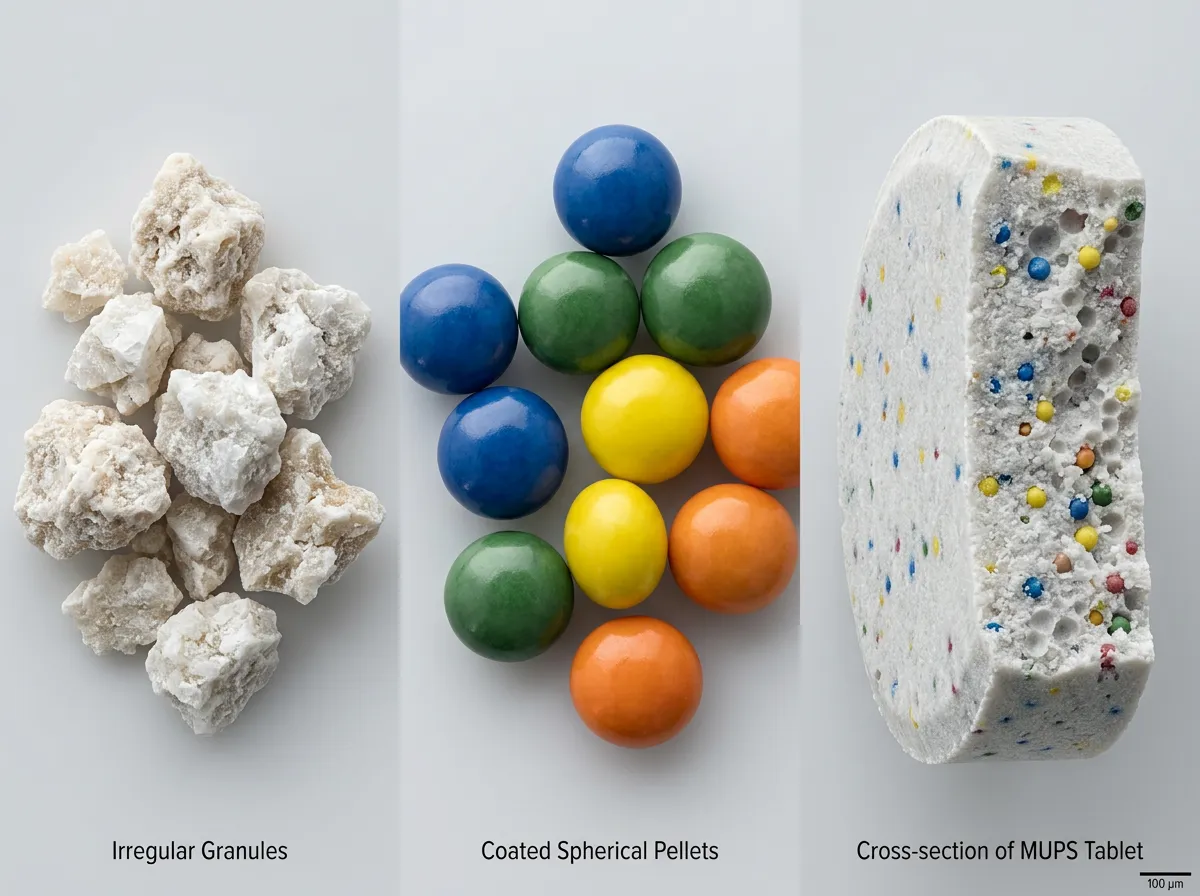
Discover the key differences between pharmaceutical pellets, MUPS, and granules. Learn about their manufacturing processes, shapes, and drug-release profiles.
Read More →
Aishwarya Salunkhe
02 February 2026
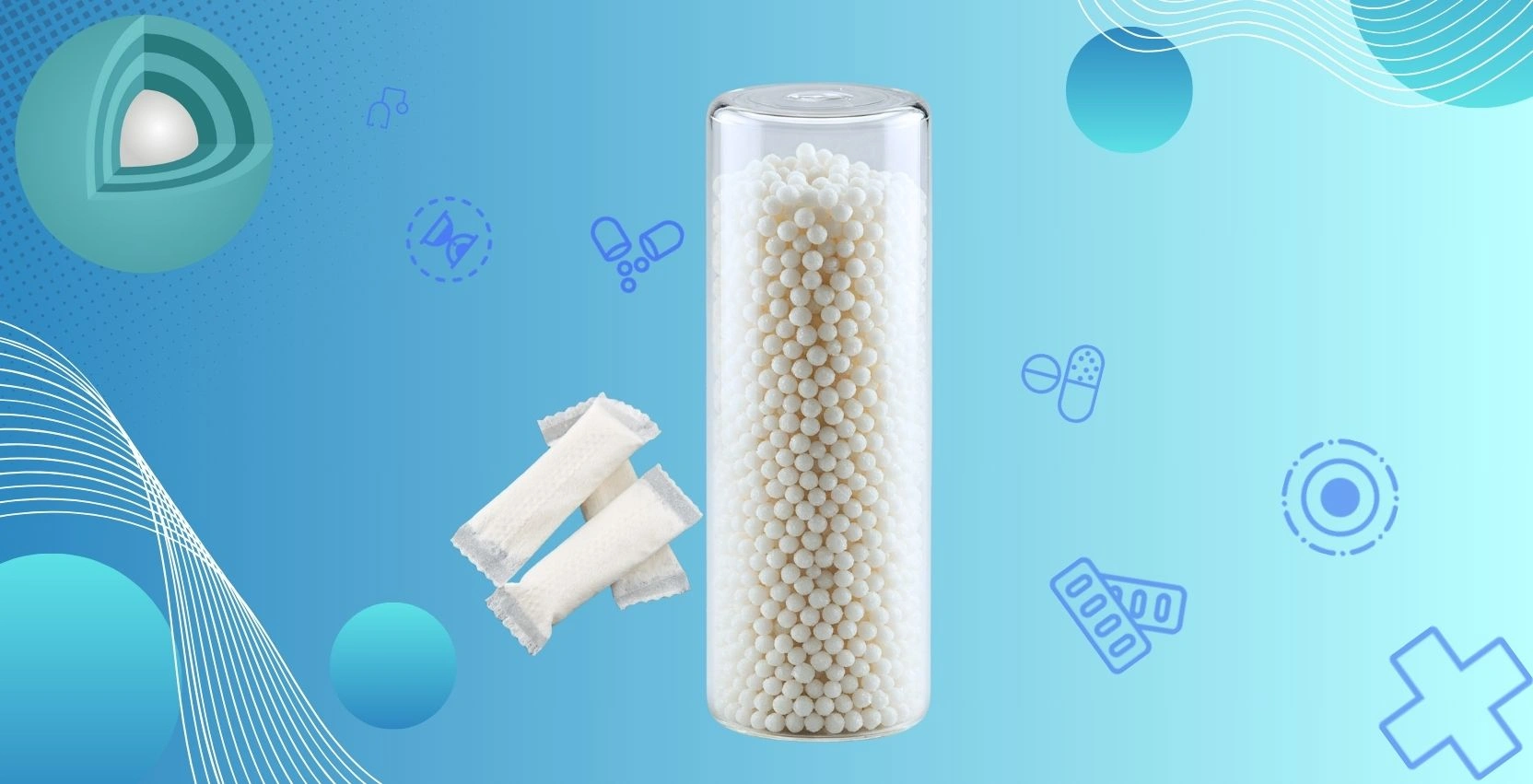
Explore the benefits of MCC spheres in nicotine pouches! Achieve a satisfying, smoke-free lifestyle with innovative design and superior taste.
Read More →

Aishwarya Salunkhe
02 February 2026
Understanding the advantages of floating drug delivery systems (FDDS) in nutraceuticals. Learn how these systems optimize absorption, release, and efficacy
Read More →

INDIA - CORPORATE OFFICE
Unit No. 1, 2nd Floor, Vicino (Mega Mall), New Link Rd, Oshiwara, Andheri West, Mumbai, Maharashtra, India. 400102
MANUFACTURING FACILITY
Unit No. 1, Survey No. 52/2, NH8, Shirsad, Vajreshwari Road, Opp. Mandvi Police Station, Village - Mandvi, Taluka- Vasai, District- Palghar 401 303, India.