Explore five common challenges in pharmaceutical pellet manufacturing, from pellet size and drug loading to coating, API protection, and scale-up.
Written By
Aishwarya Salunkhe
Published on
14 July 2026
Tags
Pellets have emerged as an excellent choice for formulating multiparticulate oral drug delivery systems owing to their versatility, precise drug release, and patient benefits. However, the production of pharmaceutical pellets requires attention to various formulation, processing, and coating factors.
Any slight change in the pellet-making process can result in poor pellet quality and inconsistent drug release. Therefore, knowledge regarding the challenges of pellet production and how to overcome them is critical.
Another important quality feature of pharmaceutical pellets is the consistency of pellet size. Pellets that vary significantly in size can lead to inconsistent coating thickness, variable drug loading, and differences in dissolution profiles. Another important quality feature of pharmaceutical pellets is the consistency of pellet size.
How to Solve the Problem
Measures can be taken by optimizing powder blend properties, carefully controlling the extrusion and spheronization process, using high-quality starter cores when applicable, and monitoring particle size distribution throughout production.
The drug layering process is one of the key steps in pellet manufacturing. If the drug distribution in the pellets is uneven, the dosage form will contain pellets with varying drug amounts. This could lead to variations in dosing, dissolution, and efficacy.
How to tackle it?
Uniform drug loading can be achieved by controlling factors such as spray rate and atomization, ensuring uniform mixing during drug layering, validating coating uniformity, and performing in-process quality monitoring
The functional coating on pharmaceutical pellets influences the delivery of the active substance. Some problems that can occur when applying the coating using fluid bed coating include agglomeration, twinning, cracks, and an orange-peel surface. This will affect the quality of the coating and its delivery effectiveness and can cause the loss of the entire batch.
How to Get It Right
For effective coating application to the pellets, inlet and outlet temperatures should be optimized to balance the spraying rate and drying capacity while ensuring adequate fluidization.
Many active pharmaceutical ingredients are prone to degradation due to moisture, heat, oxygen, or gastric acid. If not properly protected, the APIs are bound to lose their efficacy and shelf life.
The problem becomes particularly acute in cases such as APIs for omeprazole, rabeprazole, lansoprazole, and pancreatin, which require special coating techniques.
How Experts Solve the Problem
Thanks to advanced pellet techniques, manufacturers can now coat the drug with functional coatings that prevent fragile APIs from environmental damage. As per requirement, pellets may be provided with enteric-coating, sustained-release, or delayed-release coatings.
Development of a good formulation in the laboratory is just the first stage of the process. Maintaining pellet quality during manufacturing is often one of the most difficult challenges in producing pharmaceutical pellets. Changes in equipment size, process dynamics, and production volume may influence pellet quality, coating properties, and dissolution.
How Experts Resolve the Issue
Scaling up starts with establishing reliable manufacturing processes during the development stage. Identifying and controlling critical process parameters, conducting pilot-scale studies before commercial production, and using the Quality by Design (QbD) approach are key to solving this problem.
Work with Specialists in Pharmaceutical Pellets Manufacturing
Pellet manufacturing involves not only the use of state-of-the-art machinery but requires expertise in formulation, precision process control, and knowledge in multiparticulate drug delivery systems. Whether it is a need to ensure uniformity of the pellets, achieve a consistent level of drug loading, create effective coating systems, or scale the process up from lab batches to full-fledged manufacturing, choosing the right manufacturer can make all the difference.
We at Umang Pharmaceuticals provide pharmaceutical companies with expert support in manufacturing pellets for specific formulations. We have experience in creating enteric-coated, sustained-release, delayed-release, and immediate-release pellets, as well as drug layering and custom pellet manufacturing. With advanced technology, rigorous quality control, and scalable production processes, we help pharmaceutical companies streamline their product development.
Whatever your needs, be it the development of a new oral dosage form or optimization of an existing one—our company is ready to help.
Aishwarya Salunkhe
03 September 2026
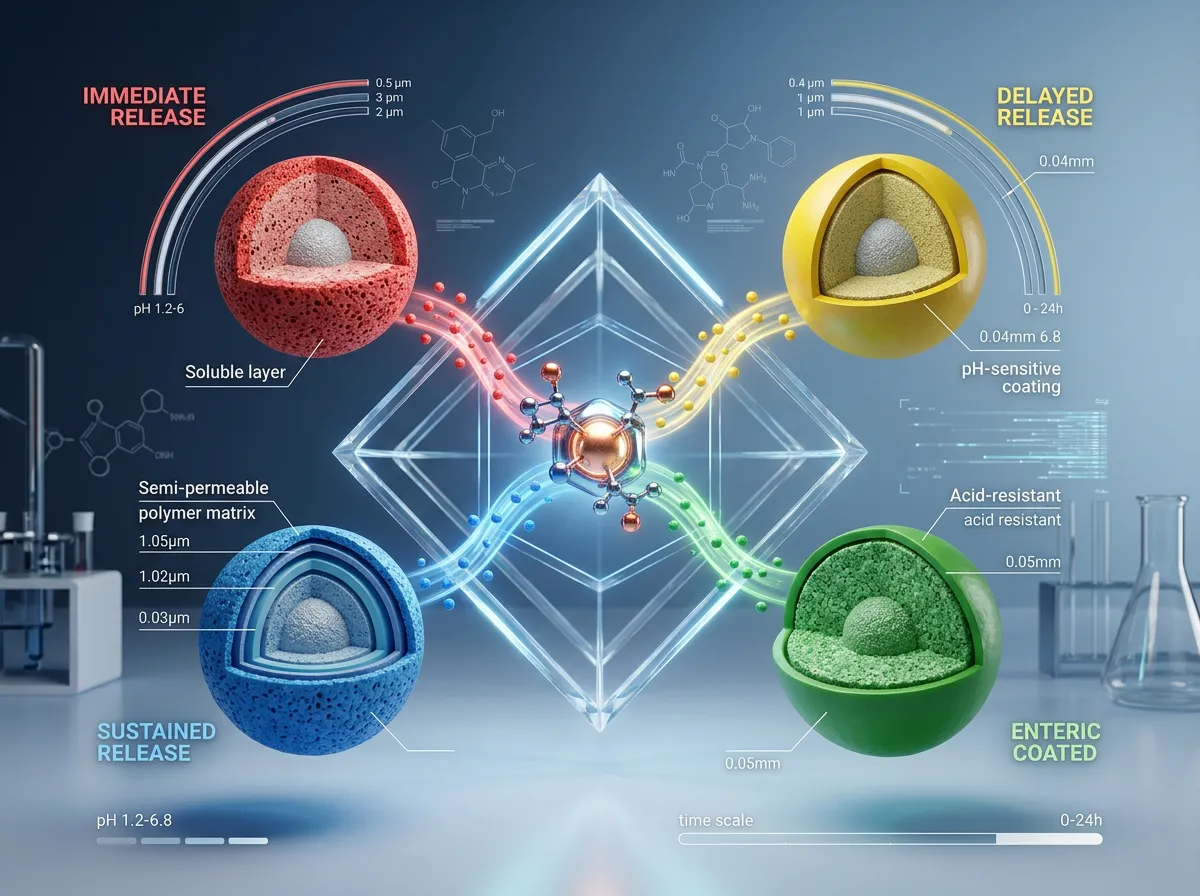
Learn why a single API requires different release technologies. Explore how pellet technology enables Immediate, Sustained, Delayed, and Enteric-Coated profiles.
Read More →
Aishwarya Salunkhe
09 September 2026
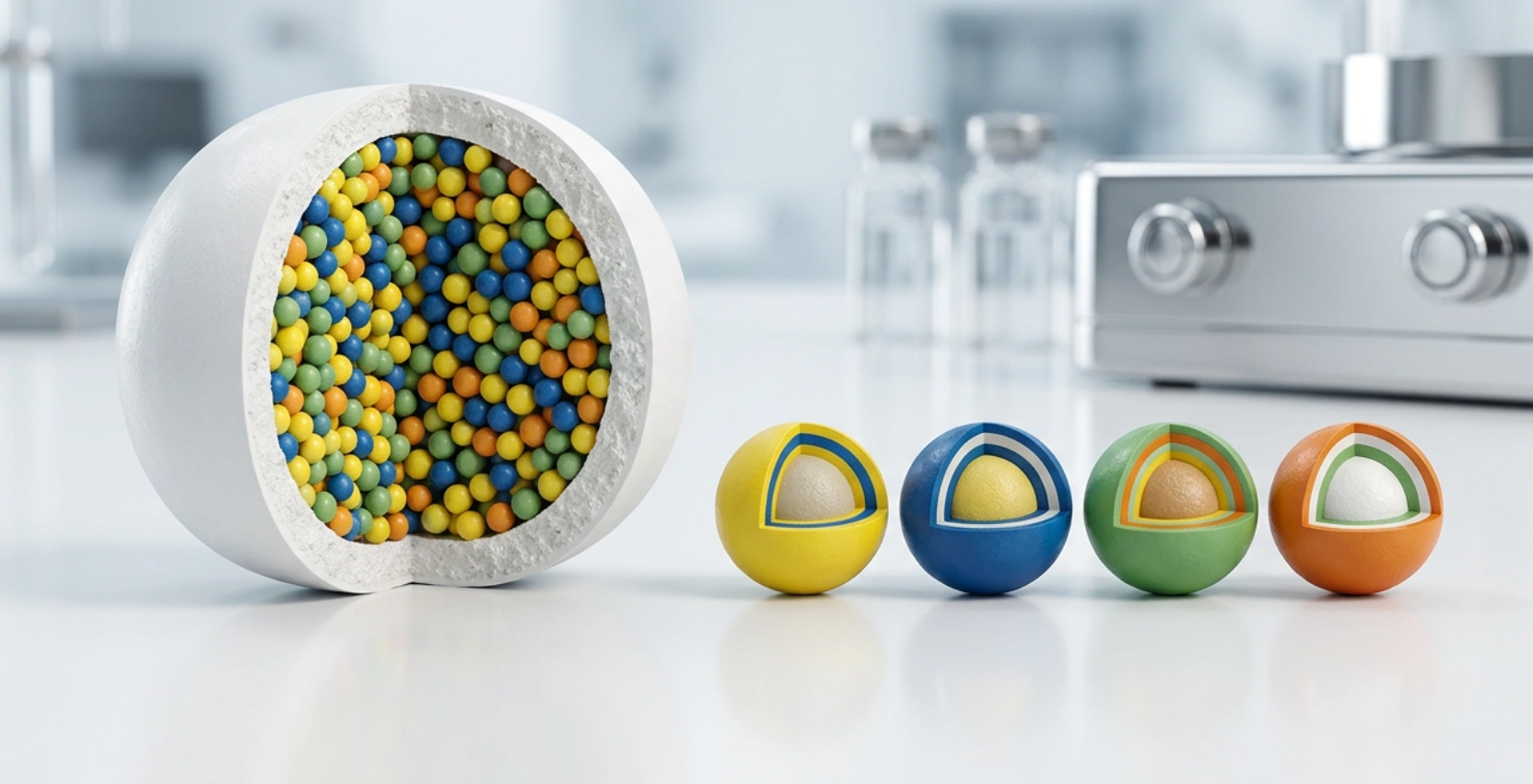
Discover how multiparticulate drug delivery systems use engineered pellets and MUPS to achieve sustained, delayed, enteric, and customized drug-release profiles.
Read More →
Aishwarya Salunkhe
02 February 2026
Explore the benefits of MCC spheres in nicotine pouches! Achieve a satisfying, smoke-free lifestyle with innovative design and superior taste.
Read More →
Aishwarya Salunkhe
03 September 2026
Learn why a single API requires different release technologies. Explore how pellet technology enables Immediate, Sustained, Delayed, and Enteric-Coated profiles.
Read More →

Sahil Pawaskar
02 February 2026
Discover how pharmaceutical encapsulation technology is revolutionizing drug delivery, enhancing therapeutic efficacy, and driving market growth.
Read More →
Aishwarya Salunkhe
09 September 2026
Discover how multiparticulate drug delivery systems use engineered pellets and MUPS to achieve sustained, delayed, enteric, and customized drug-release profiles.
Read More →

INDIA - CORPORATE OFFICE
Unit No. 1, 2nd Floor, Vicino (Mega Mall), New Link Rd, Oshiwara, Andheri West, Mumbai, Maharashtra, India. 400102
MANUFACTURING FACILITY
Unit No. 1, Survey No. 52/2, NH8, Shirsad, Vajreshwari Road, Opp. Mandvi Police Station, Village - Mandvi, Taluka- Vasai, District- Palghar 401 303, India.