Discover why multiparticulate drug delivery systems are gaining popularity, offering better drug distribution, controlled release, stability, and formulation flexibility.
Written By
Aishwarya Salunkhe
Published on
14 July 2026
Tags
For many years now, traditional tablets have been the mainstay of oral drug delivery systems owing to their ease of manufacture, affordability, and patient acceptability. Although there may be other modes of administration, oral solid dosage forms are the most commonly used due to their convenience and stability.
Although conventional single-unit tablets are inexpensive and easy to produce, they have certain disadvantages that may affect their efficacy and safety. There are clinical challenges associated with such tablets, including dose dumping, inadequate absorption, difficulty swallowing, and limited formulation flexibility.
These limitations have led to the development of more advanced drug delivery systems. Among the new technologies developed in this area, multiparticulate drug delivery systems (MDDS) are becoming increasingly popular for many oral solid dosage forms and formulations. Consisting of several smaller units, such as pellets, beads, or granules, packaged in a single dosage form, multiparticulates provide better distribution throughout the gastrointestinal tract, improved release control, minimize the risk of local irritation, and increased formulation flexibility. This has made the use of pellet technology essential in the development of immediate-release, sustained-release, and enteric-coated oral dosage forms, especially those with complex API release requirements.
With the increasing demand for safe and effective therapies, the role of multiparticulate drug delivery in the future development of oral solid dosage forms cannot be denied.
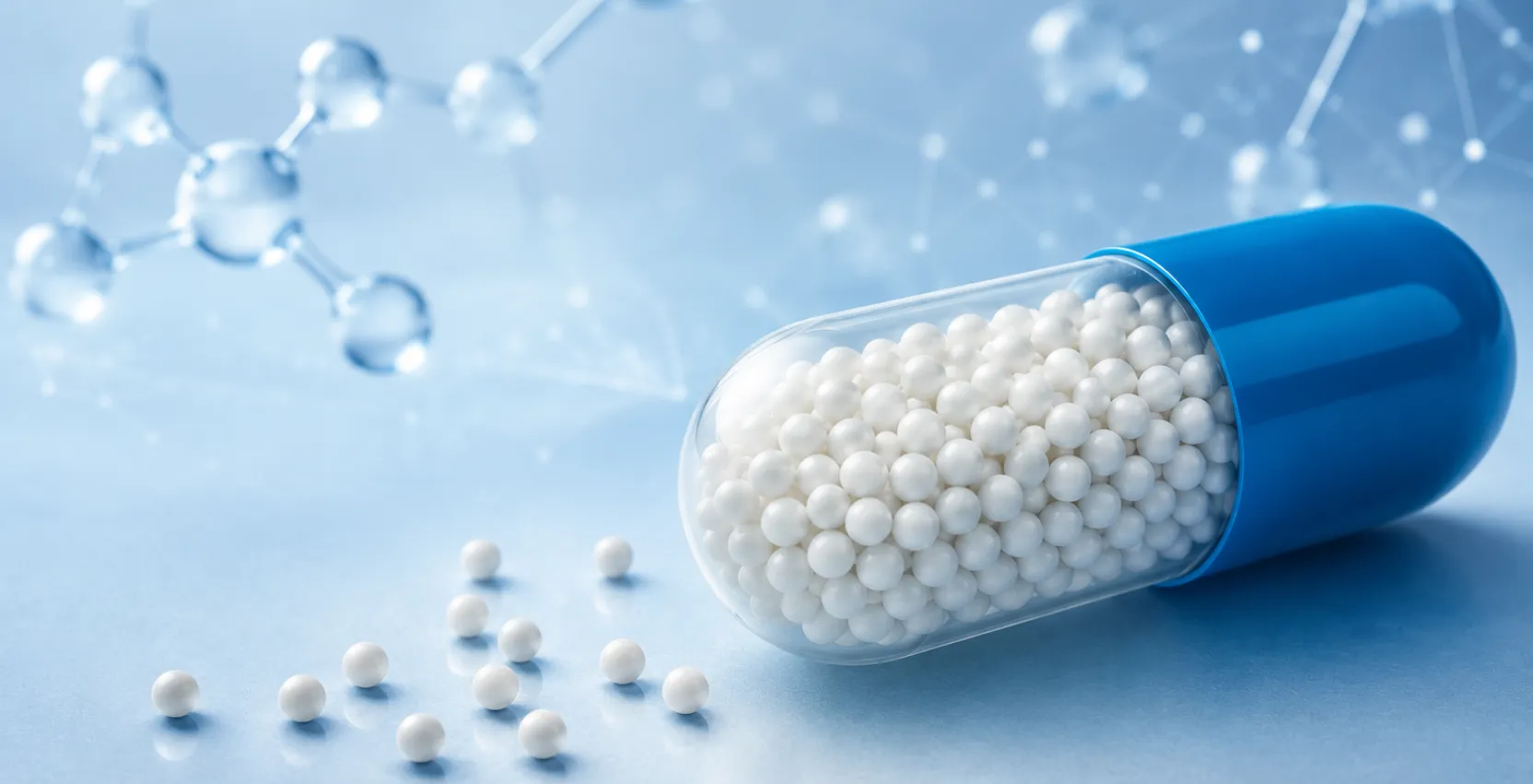
Multiparticulate drug delivery/multi-unit dosage forms are advanced oral solid dosage forms composed of several small, discrete, drug-containing units, such as pharmaceutical pellets, beads, or granules, rather than a single large tablet. In conventional tablets, the entire drug dose is contained in a single unit. However, multiparticulates involve distributing the drug dosage into several small spherical particles. All of these spheres act independently in drug delivery. Thus, medication is released in a well-defined manner within the gastrointestinal tract.
Dose Dumping
Dose dumping is the sudden, premature release of the entire drug dose into the system due to certain triggering factors such as alcohol consumption while taking certain modified-release drugs, leading to early removal of the protective coating. Physical damage to the medication can occur by crushing, chewing, or breaking the sustained-release and extended-release tablets into two parts. Eating a high-fat meal speeds up the breakdown and absorption of certain medications.
Inconsistent Absorption
When the body does not consistently absorb the medicine, it leads to uneven drug levels and less predictable treatment outcomes. The body may absorb the medicine differently from person to person, or even from one dose to the next, resulting in variable therapeutic effects. Factors such as timing, size, and composition of your meal, gastrointestinal pH, gut motility, posture, and drug interactions may lead to inconsistent absorption.
Difficulty Swallowing
Standard tablet and capsule sizes pose significant challenges for geriatric and pediatric populations, causing dysphagia (difficulty in swallowing). This leads to unsafe practices such as crushing or splitting, which can alter drug release and reduce treatment effectiveness.
Reduced Formulation Flexibility
Single-component medications offer limited options for developing complex drug delivery systems. There are complications in combining various modes of drug release, including immediate, sustained, and delayed, as well as integrating different drugs that are not compatible with each other in one dosage form, such as a tablet.
Better drug distribution
Unlike conventional tablets, multiparticulates disperse into hundreds of individual pellets after administration. These pellets spread more uniformly throughout the gastrointestinal (GI) tract, increasing the surface area available for drug absorption and reducing localized exposure to high drug concentration.
Reduced risk of dose dumping
In pellet technology, the total drug is divided among many small pellets; the failure or damage of a few pellets has minimal impact on the overall release profile. This significantly reduces the risk of dose dumping, making multiparticulates a safer option for controlled- and sustained-release formulations.
Better bioavailability
The smaller size and large surface area of the pharmaceutical pellets lead to faster, more consistent dissolution. These small pellets provide a uniform GI distribution, which can improve drug absorption, reduce interpatient variability, and enhance overall bioavailability across many formulations.
Flexible drug release
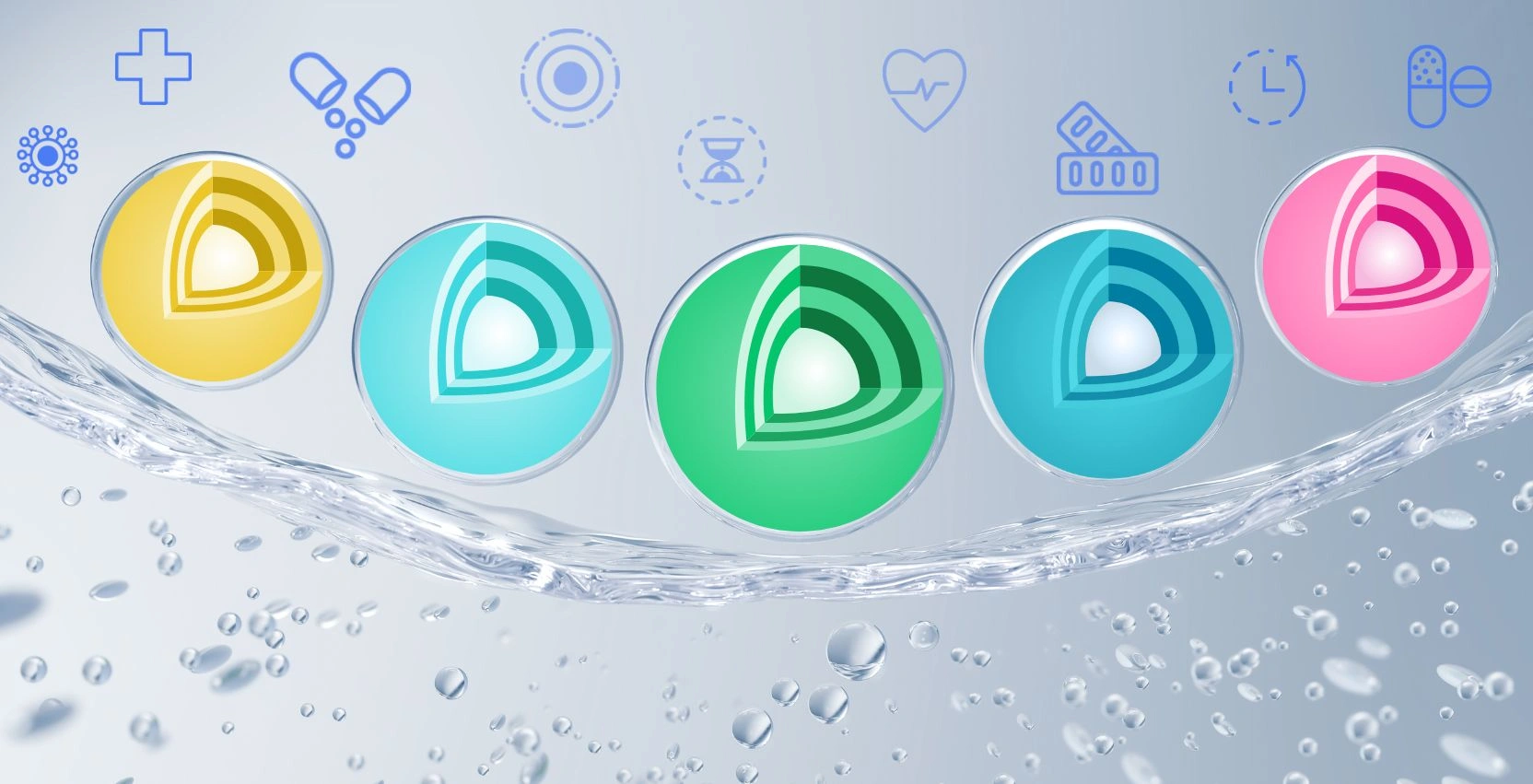
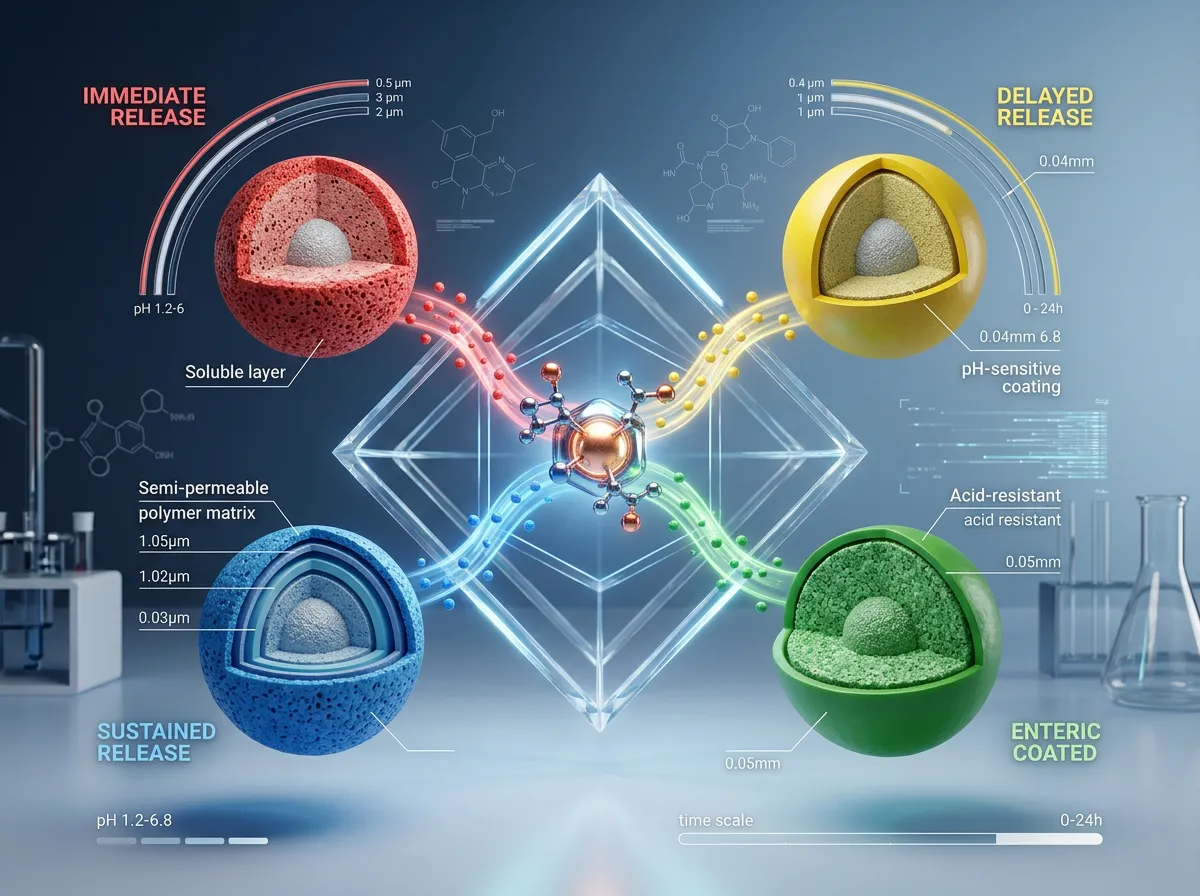
One of the most important advantages of the pellet technique is its ability to tailor drug release profiles through specific coating processes. Based on the need, pellets can have the following release profiles.
Immediate Release (IR): Rapid drug release for a quick onset of action
Sustained Release (SR): Gradual drug release over an extended period, reducing dosing frequency.
Delayed Release (DR): Drug release after a predetermined lag time.
Enteric coated (EC): Drug release in the intestine, protecting acid-sensitive APIs from the stomach environment.
Improved patient compliance
Advantages of multiparticulates include providing capsules that are easier to swallow than large tablets. Additionally, their uniform dispersion throughout the gastrointestinal tract prevents localized irritation, whereas the controlled release of drugs enhances tolerability and efficacy.
Greater formulation flexibility
Multiparticulate systems have much more versatility for drug delivery compared to normal tablets. Pellets of different types can be incorporated into a single capsule or MUPS tablet to deliver multiple active ingredients or to create complex drug formulations for combination therapy.
Many active pharmaceutical ingredients (APIs) are highly sensitive to environmental factors such as moisture, stomach acid, oxygen, and light. Without adequate protection, these APIs can degrade before reaching their site of action, reducing their effectiveness. Pellet technology, combined with advanced coating and encapsulation techniques, helps protect these sensitive drugs throughout manufacturing, storage, and administration.
Protection from Moisture
Moisture-sensitive APIs can undergo decomposition or lose their activity upon exposure to moisture. Functional polymer coatings on pharmaceutical pellets serve as a protective layer that reduces moisture absorption, thereby improving drug stability during the product's shelf life.
Protection from Acid
Some APIs decompose in the acidic medium of the stomach. The enteric-coated pellets ensure that the drug is not released in the stomach but is dissolved in the higher-pH medium of the small intestine.
Protection from Oxygen
Oxidation can cause decomposition of some drugs, thus making them ineffective. Pellet coatings protect from oxygen and help preserve the activity of oxidation-sensitive APIs.
Light Protection
Some light-sensitive medicines tend to deteriorate upon exposure to UV and/or visible light. Coating systems are developed to provide additional protection for these medicines, preserving their integrity during handling and storage.
Stability Improvement
Pellet technology protects the APIs from environmental effects and helps achieve controlled drug release, thereby increasing formulation stability. At Umang Pharmaceuticals, we design and produce pharmaceutical pellets specifically formulated for a range of applications and requirements. We specialize in enteric-coated, sustained-release, delayed-release, and immediate-release pellet technology that enables pharmaceutical companies to improve product performance, ensure stable APIs, and achieve precise drug-release characteristics. If you are looking to scale up an existing formulation or design a completely new one, we can be there for you every step of the way.
Multiparticulate drug delivery/multi-unit dosage forms are advanced oral solid dosage forms composed of several small, discrete, drug-containing units, such as pharmaceutical pellets, beads, or granules, rather than a single large tablet.
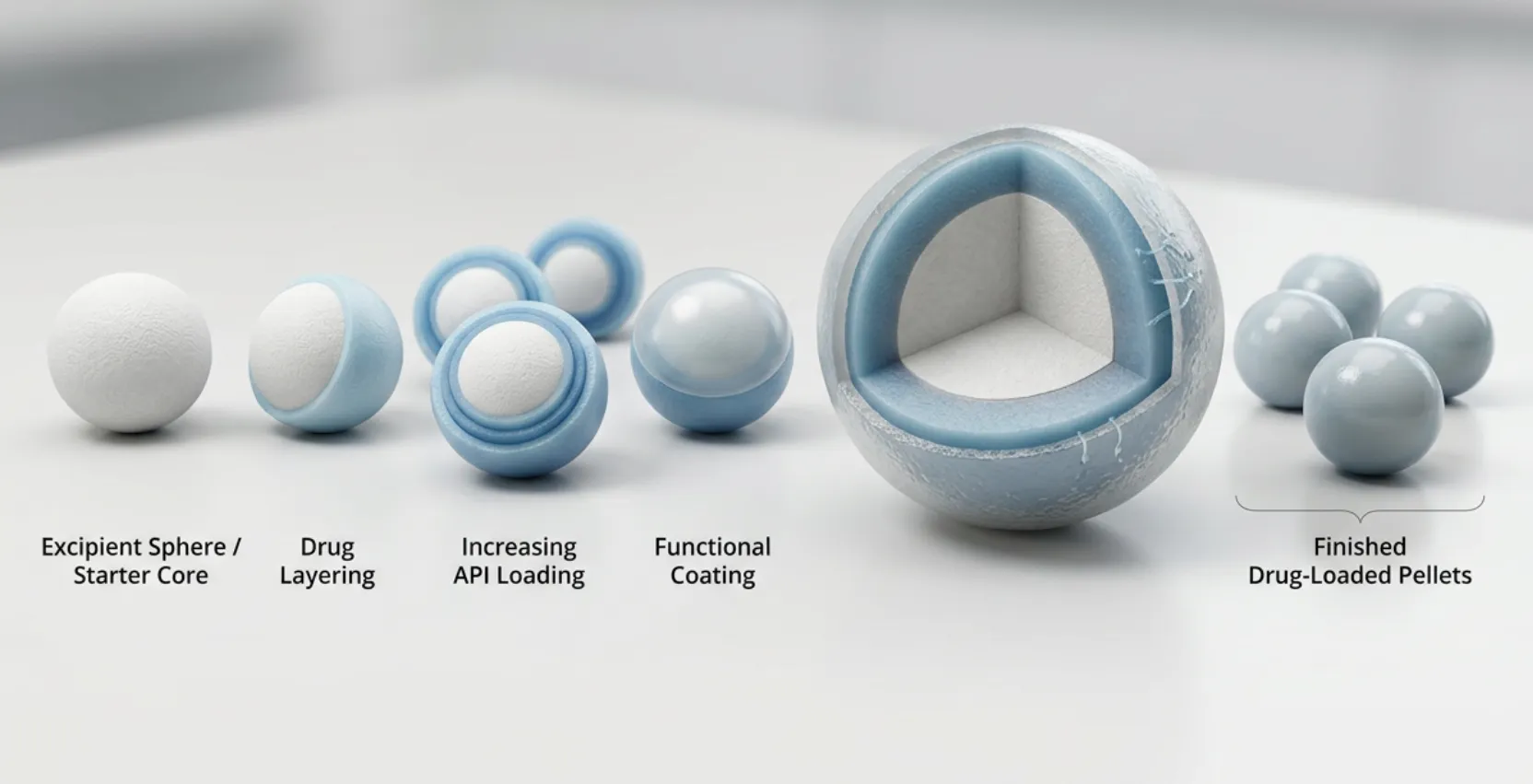
Pharmaceutical pellets are small, free-flowing spherical particles containing active pharmaceutical ingredients (APIs) that are used to develop immediate, sustained, delayed release, and enteric-coated oral dosage forms.
Pellet technology offers improved drug stability, controlled drug release, better bioavailability, reduced risk of dose dumping, enhanced patient compliance, and greater formulation flexibility.
Compared with traditional tablets, in which the entire dose is in a single tablet, pellets consist of several small units containing the drug and offer better drug distribution and tailored release rates.
Multiple Unit Pellet Systems (MUPS) are tablets produced by compressing several pellets together, offering the ease of tablet form with the benefit of multiparticulate dosage forms.
The enteric-coated pellets protect drugs sensitive to the acidic environment of the stomach and only release the active ingredient once they reach the alkaline conditions of the small intestine.
Several medications, including omeprazole, rabeprazole, lansoprazole, pantoprazole, pancreatin, tamsulosin, and many more sustained-release medicines, are usually produced through pellet technology.
Aishwarya Salunkhe
02 February 2026
Understanding the advantages of floating drug delivery systems (FDDS) in nutraceuticals. Learn how these systems optimize absorption, release, and efficacy
Read More →
Aishwarya Salunkhe
03 September 2026
Learn why a single API requires different release technologies. Explore how pellet technology enables Immediate, Sustained, Delayed, and Enteric-Coated profiles.
Read More →
Aishwarya Salunkhe
14 July 2026
Explore five common challenges in pharmaceutical pellet manufacturing, from pellet size and drug loading to coating, API protection, and scale-up.
Read More →
Sahil Pawaskar
02 February 2026
Discover how pharmaceutical encapsulation technology is revolutionizing drug delivery, enhancing therapeutic efficacy, and driving market growth.
Read More →
Aishwarya Salunkhe
14 July 2026
Learn how Pancreatin EC Pellets overcome acid sensitivity, enhance enzyme stability, improve intestinal targeting, and support scalable pharmaceutical manufacturing.
Read More →
Aishwarya Salunkhe
17 September 2026
Learn how drug loading affects pharmaceutical pellet quality, coating, dosage, release, and formulation performance, and why optimal loading matters.
Read More →

INDIA - CORPORATE OFFICE
Unit No. 1, 2nd Floor, Vicino (Mega Mall), New Link Rd, Oshiwara, Andheri West, Mumbai, Maharashtra, India. 400102
MANUFACTURING FACILITY
Unit No. 1, Survey No. 52/2, NH8, Shirsad, Vajreshwari Road, Opp. Mandvi Police Station, Village - Mandvi, Taluka- Vasai, District- Palghar 401 303, India.